Is Trex decking worth the extra money vs pressure-treated wood? · CrewVisto Journal
Is Trex decking worth the extra money vs pressure-treated wood?
Trex costs more up front than pressure-treated wood but needs far less upkeep. Here's how the costs, maintenance and lifespan compare in the Northeast.
Is Trex decking worth the extra money vs pressure-treated wood?
For a lot of Northeast homeowners, Trex decking is worth the extra money if you plan to stay in the home 10 years or more and don't want to spend weekends sanding and sealing. Pressure-treated wood costs less up front, often a lot less. But it needs regular care to get through New Jersey, Pennsylvania and New York winters. If money's tight, you might move soon, or you don't mind the upkeep, pressure-treated wood can still be the smarter buy.
It comes down to your budget, how long you'll own the house, and how much maintenance you're willing to do. Here's how the numbers work out.
Is Trex decking worth the extra money? The short answer
Trex is a brand of composite decking. Composite boards are made from a mix of wood fiber and plastic. You don't stain or seal them, and they hold up against rot and splinters. Pressure-treated (PT) lumber is real wood, usually Southern yellow pine, treated with chemicals to slow down rot and insects.
The quick version:
Composite costs more to build but much less to maintain.
Over 15 to 20 years, the total cost gap often shrinks, especially if you'd pay someone to clean and seal a wood deck.
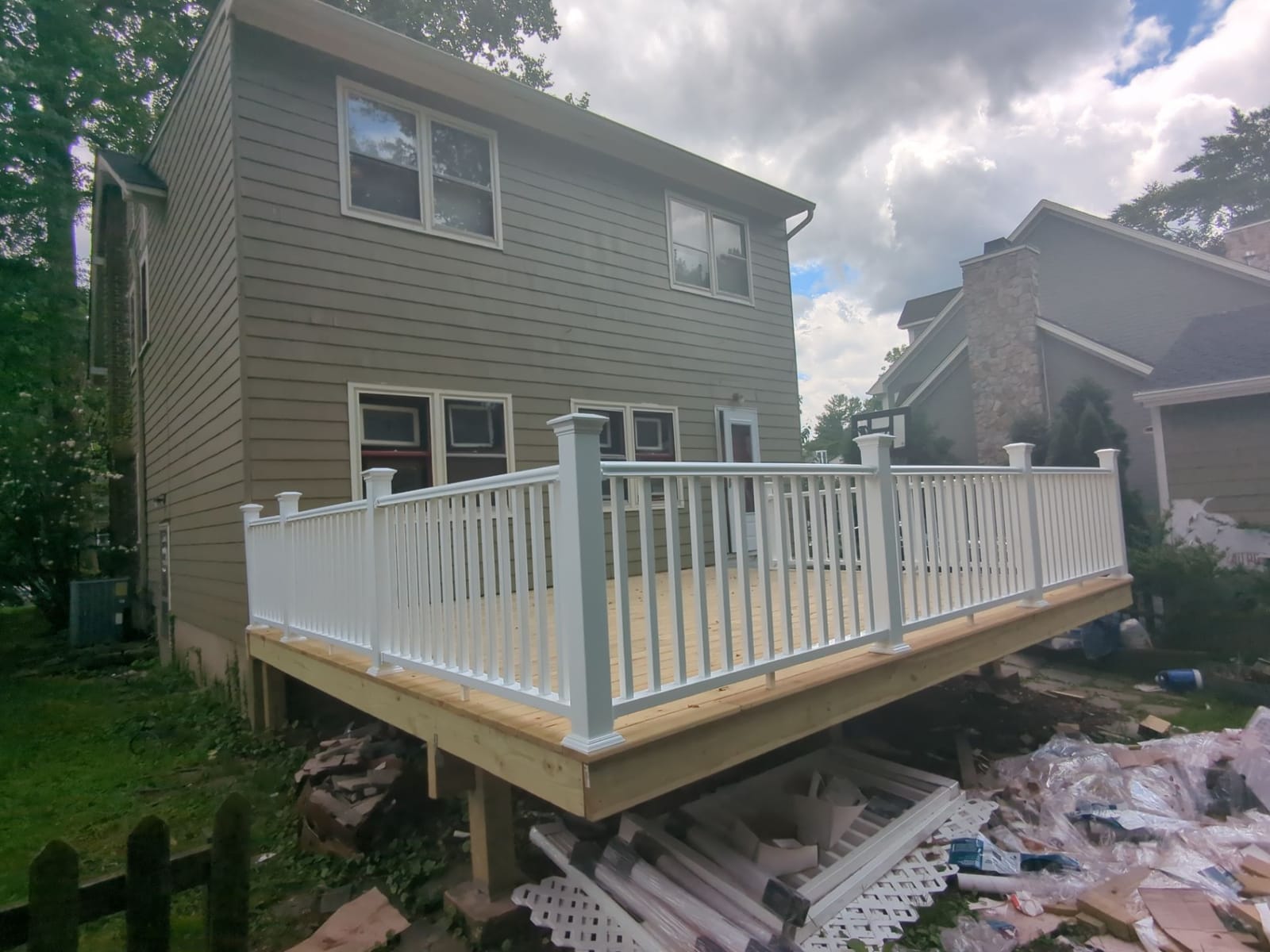
Here's something a lot of people don't realize. Most composite decks still sit on a pressure-treated wood frame. The posts, beams and joists are usually PT lumber either way. So you're really choosing the decking boards and railings, the parts you see and walk on.
What each option costs up front
Prices swing a lot depending on region, deck size, height, railing style, stairs and site access. Labor around New York City and northern New Jersey usually runs higher than in rural Pennsylvania, too. Take these as rough ranges, not quotes.
Pressure-treated wood deck, installed: often around $25 to $50 per square foot.
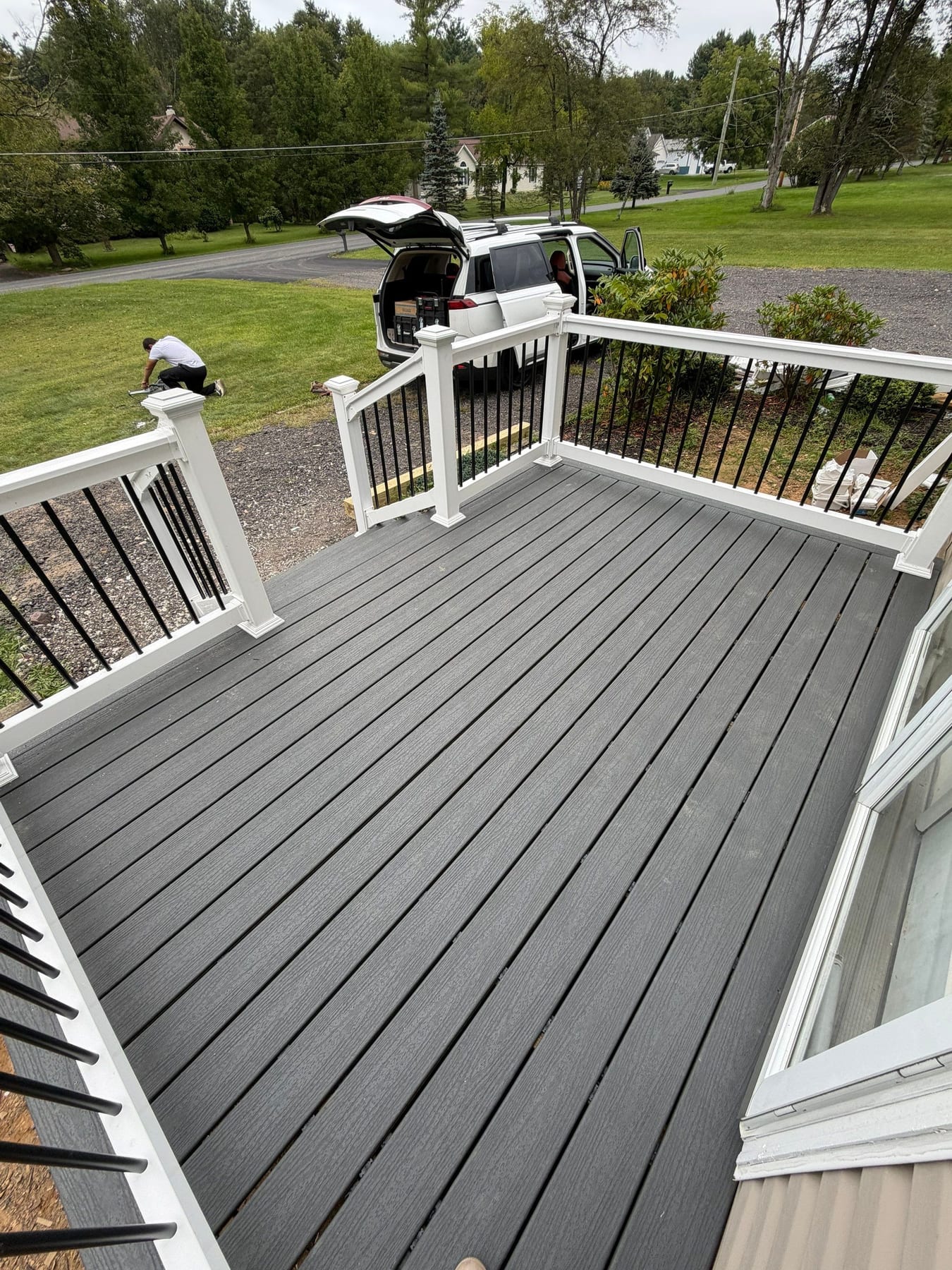
Composite deck (like Trex), installed: often around $45 to $90 or more per square foot, depending on the product line and railings.
On a basic 12-by-16-foot deck (192 square feet), that might come to something like $5,000 to $10,000 for PT wood and $9,000 to $17,000 or more for composite. Railings can account for a big chunk of that difference. Composite or aluminum railings usually cost far more than wood ones.
Composite can bump up framing costs a little as well. Many composite boards call for tighter joist spacing, especially if you're running them diagonally. Always check the manufacturer's install guide and your local building code.
This is where composite pays for itself. Decks up here take snow, ice, freeze-thaw cycles, humid summers, and plenty of shade and leaf litter from trees. Wood doesn't love any of that.
Pressure-treated wood upkeep
A PT deck usually needs:
A good cleaning every year.
Stain or sealer every 1 to 3 years, depending on sun, shade and the product used.
Sanding or replacing boards that crack, cup, split or splinter.
A check for popped nails or screws after winter.
If you hire it out, cleaning and sealing a mid-size deck might run anywhere from a few hundred to over a thousand dollars each time, depending on size and condition. Doing it yourself saves money but eats a weekend or two. Our DIY section covers safe, ground-level projects like deck cleaning.
Composite upkeep
Composite is lower maintenance. It isn't zero maintenance. You'll still need to:
Wash it a couple of times a year with soap and water or a cleaner the manufacturer approves.
Clear off leaves and debris so mold and mildew don't build up in shady spots.
Use a plastic shovel for snow, and check the manufacturer's guidance before putting down ice melt.
What you skip is the staining and sealing, and that's where the big savings in time and money come from.
How long each one lasts
How long a deck lasts depends a lot on how it was built and cared for. Good flashing at the house, proper ventilation under the deck and the right fasteners matter as much as the boards you pick.
Pressure-treated decking boards often last around 10 to 20 years with regular care. Neglected decks can wear out sooner, especially in damp, shady yards.
Composite decking often lasts 25 years or more. Manufacturers offer warranties on fading and staining, but the terms vary by product line. Read the warranty and register it if that's required.
Keep in mind the frame underneath is usually PT wood either way. If the frame isn't built right, the composite boards can outlast it. Ask your contractor about joist tape, ground-contact rated lumber where it's needed, and proper ledger flashing.
If you'd keep a PT deck for 20 years, plan on replacing or heavily repairing the boards once in that stretch. That's a real cost, and it belongs in the comparison.
When pressure-treated wood still makes sense
Composite isn't the right call for everybody. PT wood can be the better choice when:
You plan to sell within a few years. You may not get the extra cost back.
The budget is tight. A well-built PT deck beats a poorly built composite one every time.
You like real wood. Some people prefer the look, feel and smell, and actually enjoy refinishing it.
It's a low-use or utility deck. A small landing or a deck nobody sees may not need premium boards.
You might want a different color later. Wood can be re-stained. Composite colors are mostly fixed.
Composite has its own downsides. Darker boards can get very hot in direct summer sun. Furniture and pet claws can scratch them. Some cheaper composite lines fade more than you'd expect. Ask for samples in person and leave them out in the sun if you can.
Tips for contractors quoting both options
Plenty of Northeast homeowners ask for both prices. A clear side-by-side helps them decide, and it builds trust.
Quote both on the same frame. Show that framing costs are about the same, so the real difference is obvious.
Show the 15-year picture. Put likely sealing and repair costs for PT right next to the composite price.
Bring samples. Let homeowners see colors and textures in their own light.
Note code and warranty details. Joist spacing, fasteners and gaps can affect warranty coverage. Follow the manufacturer's install guide and local code.
Photograph the framing before the decking goes on. It's proof of work the homeowner will never see again.
For more on pricing and selling jobs, see our Contractor Business section. If you're documenting framing, flashing and finished work, the CrewVisto Academy covers organizing jobsite photos and sharing reports with homeowners.
Common questions
Does a composite deck add more resale value than a wood deck?
That depends on your local market and who's buying in your area. A clean, well-kept deck of either type can help a house show better. A worn, splintered wood deck can do more harm than good. If resale is your main concern, talk to a local real estate agent.
Can I put Trex boards on my existing wood deck frame?
Sometimes. The frame has to be sound, and the joist spacing has to meet the manufacturer's requirements. A lot of older frames have joists spaced too far apart or show rot. Have a contractor look it over before you buy materials, and check local code, since some towns require permits for re-decking.
Is composite decking slippery in winter?
Any deck can get slippery with ice or wet leaves on it. Composite boards usually have a textured surface for grip, but you still have to clear snow and ice. Check the manufacturer's guidance on which shovels and ice melt products are safe to use.
How often should I seal a pressure-treated deck in the Northeast?
Most decks need it every 1 to 3 years. Sunny decks and high-traffic spots usually need it more often. Easy test: sprinkle some water on the boards. If it soaks in fast instead of beading up, it's time to clean and reseal.
Should I build a deck myself to save money?
A ground-level deck can be a DIY job for an experienced homeowner. Raised decks attached to the house are a different story, with real safety risks. Ledger attachment, footings and railings all have to meet code. For anything elevated, hire a licensed pro and pull the proper permits. For more ideas, check out our Decks section.
Guides and news for contractors and homeowners from the team behind CrewVisto.
This article is general information. Codes, prices and warranties vary by town and product; have a licensed contractor look at your situation before you start.

Comments
Loading comments…