
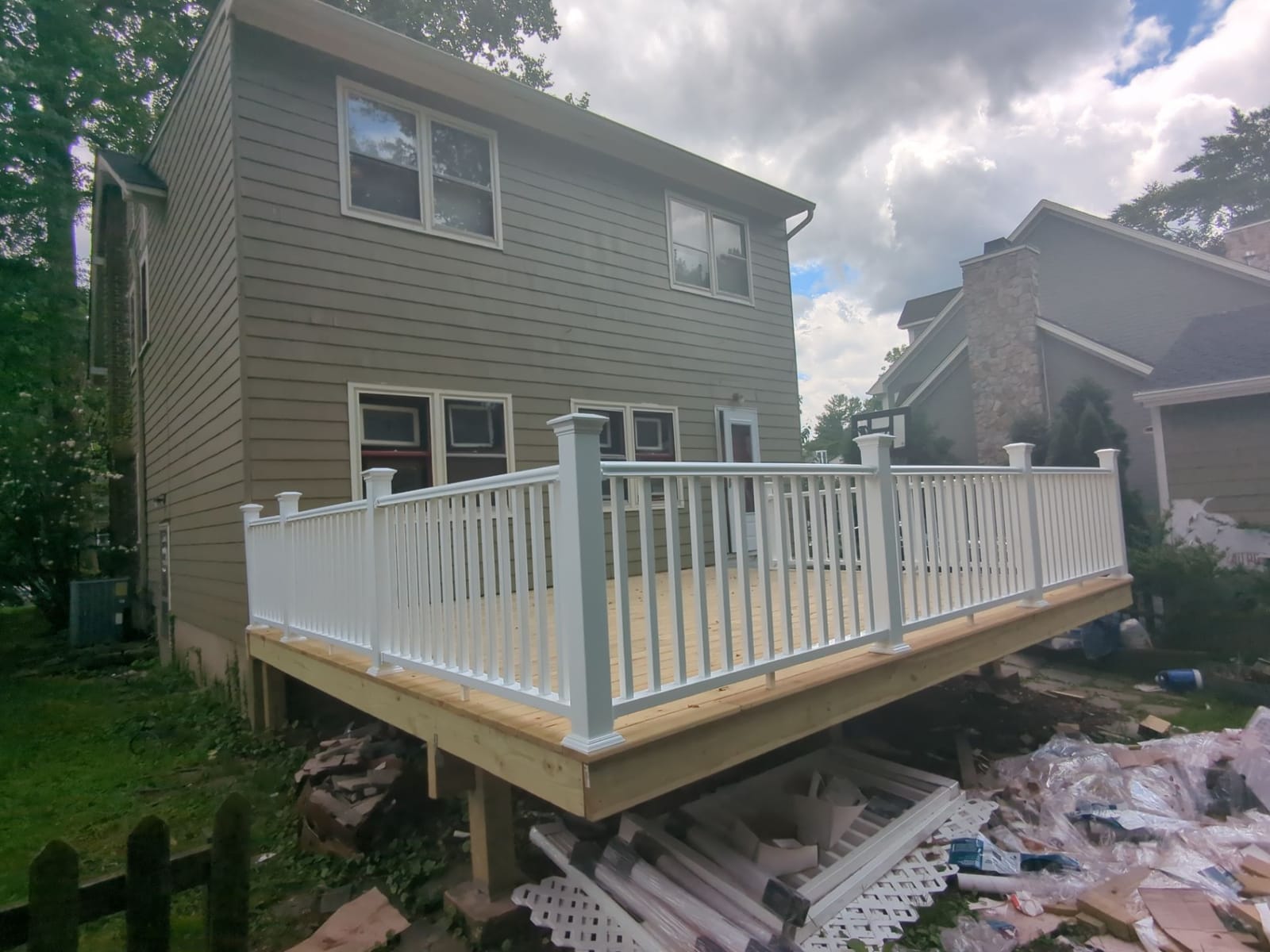
Most deck inspection failures come down to a handful of details. Many towns in the US base their rules on the International Residential Code (IRC) with local amendments, so always confirm requirements with your building department. These are the problem areas inspectors flag most often.
Ledger attachment and flashing
A deck attached to the house is only as strong as its ledger connection. Inspectors look for the right fasteners (through-bolts or approved structural screws, not nails alone), a proper fastening pattern, and flashing that keeps water out of the house framing. Missing or poorly lapped flashing is one of the most common reasons for rot behind a ledger.
Footings
Footings need to sit on undisturbed soil and below the local frost depth, which varies by region. Many inspections require the holes to be checked before concrete is poured. Undersized or shallow footings can let a deck heave or settle.
Posts, beams and connections
- Posts should be properly sized and attached to footings and beams with approved hardware.
- Beam splices need to land over posts.
- Joist hangers must be the right size and filled with the fasteners the manufacturer specifies.
Guards and railings
Under the IRC, a guard is generally required where a walking surface is more than 30 inches above the grade below. Inspectors check guard height, the strength of guard posts, and opening sizes: openings are commonly limited so a 4-inch sphere can't pass through. Confirm the exact numbers in your town.
Stairs
Stairs fail inspection for inconsistent riser heights, missing handrails, poor stringer support and missing stair lighting. Uniform steps matter: a single uneven step is a tripping hazard.
How to pass the first time
- Pull the permit and read the town's deck guide before you build.
- Photograph footings, hardware, flashing and fasteners before they're covered.
- Use hardware exactly as the manufacturer's instructions say.
About the author
CrewVisto Editors
Guides and news for contractors and homeowners from the team behind CrewVisto.
This article is general information. Codes, prices and warranties vary by town and product; have a licensed contractor look at your situation before you start.
Comments
Loading comments…