For most Northeast homeowners, picking between vinyl and fiber cement siding comes down to budget, upkeep and the look you want. Vinyl costs less upfront and almost never needs paint. Fiber cement costs more, but it resists dents, fire and pests, and it looks closer to real wood. If you plan to stay put a long time, or your neighborhood leans toward a classic painted look, fiber cement is often worth the money. If you want solid protection at a lower price and don't want to fuss with it, quality vinyl is a smart pick.
Here's how each one handles New Jersey, Pennsylvania and New York weather, what they cost, and how to decide.
Vinyl vs fiber cement siding at a glance
The short version first.
Vinyl siding
Made from PVC plastic, with color baked all the way through
Lower material and labor cost
Light and fast to install
No painting needed, just occasional washing
Can crack from hard hits in cold weather and can warp from strong heat
Lots of colors, profiles and insulated options
Fiber cement siding
Made from cement, sand and wood fibers
Higher material and labor cost
Heavy, and takes more skill and time to install
Needs painting over time, though many products come factory-finished
Holds up well to impact, fire, insects and woodpeckers
Looks like painted wood clapboard, shingles or board-and-batten
Neither one is "better" for every house. It depends on the home, how long you'll be there and what you can spend.
How each holds up in Northeast weather
Northeast homes get a bit of everything: freezing winters, humid summers, nor'easters, heavy snow and, near the shore, salty air. Both materials can handle it when they're installed right. They just react differently.
Cold and freeze-thaw cycles
Vinyl gets stiffer and more brittle when it freezes. A hockey puck, ice thrown by a snow blower or a falling branch is more likely to crack it in January than in July. Thicker, higher-grade vinyl does better here than thin builder-grade panels.
Guides and news for contractors and homeowners from the team behind CrewVisto.
This article is general information. Codes, prices and warranties vary by town and product; have a licensed contractor look at your situation before you start.
Fiber cement doesn't get brittle in the cold the same way. Its weak spot is water at the cut edges and the bottom. If the crew doesn't seal and space it the way the manufacturer requires, moisture can soak in and cause trouble over many freeze-thaw cycles.
Heat and sun
Vinyl expands and contracts with temperature, so it has to hang loose enough to move. In summer, sunlight bouncing off a neighbor's energy-efficient windows can sometimes get hot enough to warp vinyl panels. Fiber cement doesn't have that problem.
Wind and storms
Both can do fine in high winds when they're nailed to the manufacturer's specs. Fiber cement's weight helps it stay put. Vinyl depends a lot on correct nailing and lock strength, so ask about wind ratings if you're in an exposed spot like the Jersey Shore or the shores of Long Island.
Moisture behind the siding
No siding is fully waterproof. What actually protects your walls is the weather-resistive barrier (house wrap) and the flashing behind it, especially around windows, doors and rooflines. That matters as much as which siding you choose. If you're replacing siding near a roof edge, it's a good time to check your roofing flashing too.
Cost: upfront and over time
Prices swing a lot by region, materials, the size and shape of the house, and how much wall repair is needed. Treat these as rough ballpark ranges, not quotes.
Vinyl siding installed: roughly $4 to $9 per square foot, with insulated or premium vinyl at the higher end or above
Fiber cement siding installed: roughly $8 to $15 or more per square foot, depending on product, finish and trim details
On a typical home, that gap can add up to several thousand dollars or more. Tear-off of old siding, rotted sheathing repairs, new trim and permits add to the cost of either one.
Over the long run, the numbers shift a bit. Vinyl needs little more than washing. Fiber cement will need repainting at some point. Factory finishes often last longer than paint applied on site, but how long depends on the manufacturer and how exposed your walls are, so read the finish warranty. On the other side, fiber cement may need fewer panel replacements from dents and cracks over the years.
Looks, resale and neighborhood rules
Looks count, especially in older Northeast towns full of colonials, Victorians and farmhouses.
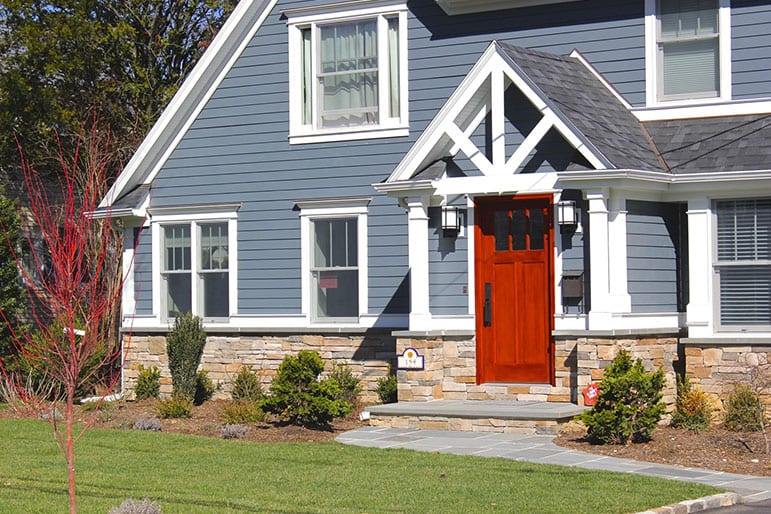
Fiber cement has deeper shadow lines and a flat, painted finish that reads like real wood. You can repaint it any color later. That's why it's popular on older homes and in neighborhoods where buyers expect a traditional look.
Vinyl has come a long way. The better products have thicker panels, more realistic textures and richer colors. Still, up close, a lot of people can tell it's vinyl. Changing the color later is harder too, since vinyl isn't really made to be painted unless you use products and colors approved for it.
Before you choose, check two things:
Historic districts and HOAs. Many towns in New Jersey, Pennsylvania and New York have historic districts or HOA rules that limit siding materials or colors. Call your local building or zoning office.
Fire rules. Fiber cement is generally noncombustible, while vinyl can melt and burn. Some local codes have special requirements when houses sit close together. Check local code, and check with your insurer about any effect on your policy.
A great product installed badly will fail. An average product installed well can last decades. That goes for both materials.
For homeowners, ask any contractor:
How many jobs have you done with this material?
Will you follow the manufacturer's installation instructions so the warranty stays valid?
What house wrap and flashing will you use?
How will you handle rot or damaged sheathing you find after tear-off?
Can you show me photos of past jobs and of work in progress?
Siding work usually means ladders, scaffolding and working near roof edges. It isn't a safe DIY project for most homeowners, especially on two-story Northeast houses. Leave it to insured pros.
For contractors, each material asks something different of your crew. Vinyl crews need to leave room for movement and not nail too tight. Fiber cement crews need to handle heavy boards safely and keep dust under control. Cutting fiber cement releases silica dust, which is regulated for worker safety, so use approved cutting methods, dust collection or shears, and follow current federal and state rules.
Take photos, too. Shots of the house wrap, flashing and sheathing repairs before they get covered up protect you if questions come up later. Our CrewVisto Academy covers simple ways to keep jobsite photos organized by job, and Contractor Business has tips on quoting and selling siding jobs.
How to decide
Work through these questions:
How long will you stay? Ten-plus years tilts toward fiber cement. A few years tilts toward vinyl.
What's your budget? If fiber cement would stretch you thin, good vinyl with proper flashing is a solid choice.
How much upkeep do you want? If you never want to think about paint, vinyl wins.
What does your street look like? On historic or high-end blocks, fiber cement may fit in better and help resale.
What hits your walls? Lots of trees, kids' games or snow equipment? Fiber cement takes impact better.
Get at least two or three quotes, ideally pricing both materials, so you're comparing real numbers for your house. For more, see the rest of our Siding section.
Common questions
Does vinyl siding crack in Northeast winters?
It can. Vinyl gets more brittle in the cold, so a hard hit is more likely to crack it in winter. Thicker, higher-quality vinyl and careful installation cut the risk, and single panels can usually be replaced.
How often does fiber cement siding need painting?
It depends on the product, the finish and how much sun and weather your walls take. Factory-applied finishes often outlast paint applied on site. The manufacturer's finish warranty will give you a better idea.
Is fiber cement worth the extra cost?
Often, yes, if you plan to stay a long time, want a painted-wood look, or live where impact or fire resistance matters. If money is tight or you might move soon, quality vinyl can be the better value.
Can I put new siding over my old siding?
Sometimes, but many contractors prefer a full tear-off. Pulling the old siding lets them check for rot, fix sheathing and install proper house wrap and flashing. Check local code and the new siding manufacturer's rules.
Does insulated vinyl siding help with energy bills?
Insulated vinyl has a foam backing that can add a little insulation and makes the panels stiffer. How much it helps depends on your walls and the rest of your home's insulation, so think of it as a bonus, not a replacement for proper wall insulation.

Comments
Loading comments…