
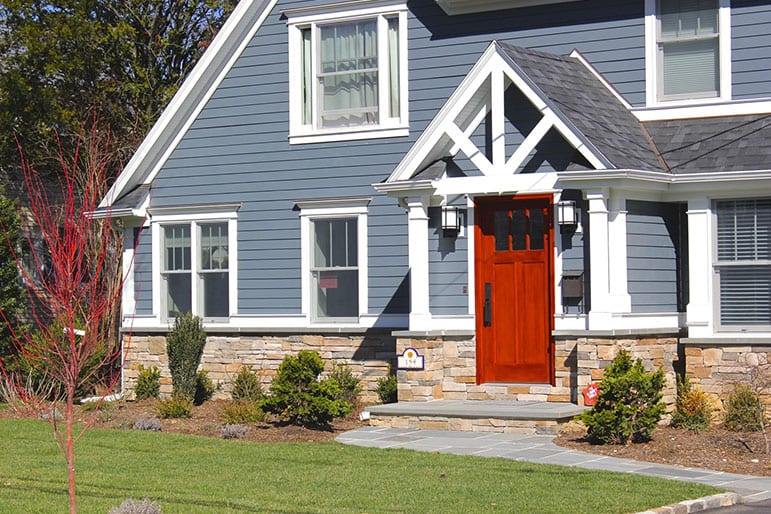
For a lot of homes in New Jersey, Pennsylvania and New York, new vinyl siding runs roughly $5 to $12 per square foot installed. That covers materials and labor. On a typical single-family house, the total often ends up around $12,000 to $30,000, sometimes more. Where you land depends on the size and shape of the house, the grade of vinyl, whether the old siding has to come off, and what labor costs in your town. These are ballpark numbers. Written quotes from local contractors are what give you a real price.
Here's what goes into the price, why Northeast jobs often cost more than the national averages you see online, and how to compare quotes so you're not comparing apples to oranges.
How vinyl siding is priced
Most contractors price siding by the square. One square is 100 square feet of wall. So $700 per square is the same as $7 per square foot.
That square footage is wall area, not the floor space of the house. A 2,000-square-foot two-story colonial might have somewhere around 2,000 to 3,000 square feet of wall, depending on its shape, the gables, and how many windows and doors it has. The contractor measures each wall, subtracts the big openings, and adds a little for waste and cut pieces.
A full siding quote usually covers more than panels. You'll typically see:
- Vinyl panels
- House wrap or a weather-resistant barrier
- Trim, corners, J-channel and soffit and fascia (if included)
- Removal and disposal of old siding (if needed)
- Labor, permits and cleanup
What drives the cost of vinyl siding
Two houses with the same wall area can get very different quotes. These are the main reasons.
Grade and thickness of vinyl
Vinyl comes in builder, standard and premium grades. Thicker panels usually hold up better against waves, sagging and dents, and they usually cost more. Some lines also offer deeper colors or more realistic wood-grain textures, which can bump the price. Specs and warranty terms vary by manufacturer, so read them.
Insulated vinyl
Insulated vinyl has foam backing attached to the panel. It feels stiffer on the wall and adds some insulation. Expect it to cost noticeably more than standard vinyl. Whether it's worth it depends on your house, the insulation already in your walls, and what you pay for energy.
About the author
CrewVisto Editors
Guides and news for contractors and homeowners from the team behind CrewVisto.
This article is general information. Codes, prices and warranties vary by town and product; have a licensed contractor look at your situation before you start.
Comments
Loading comments…