
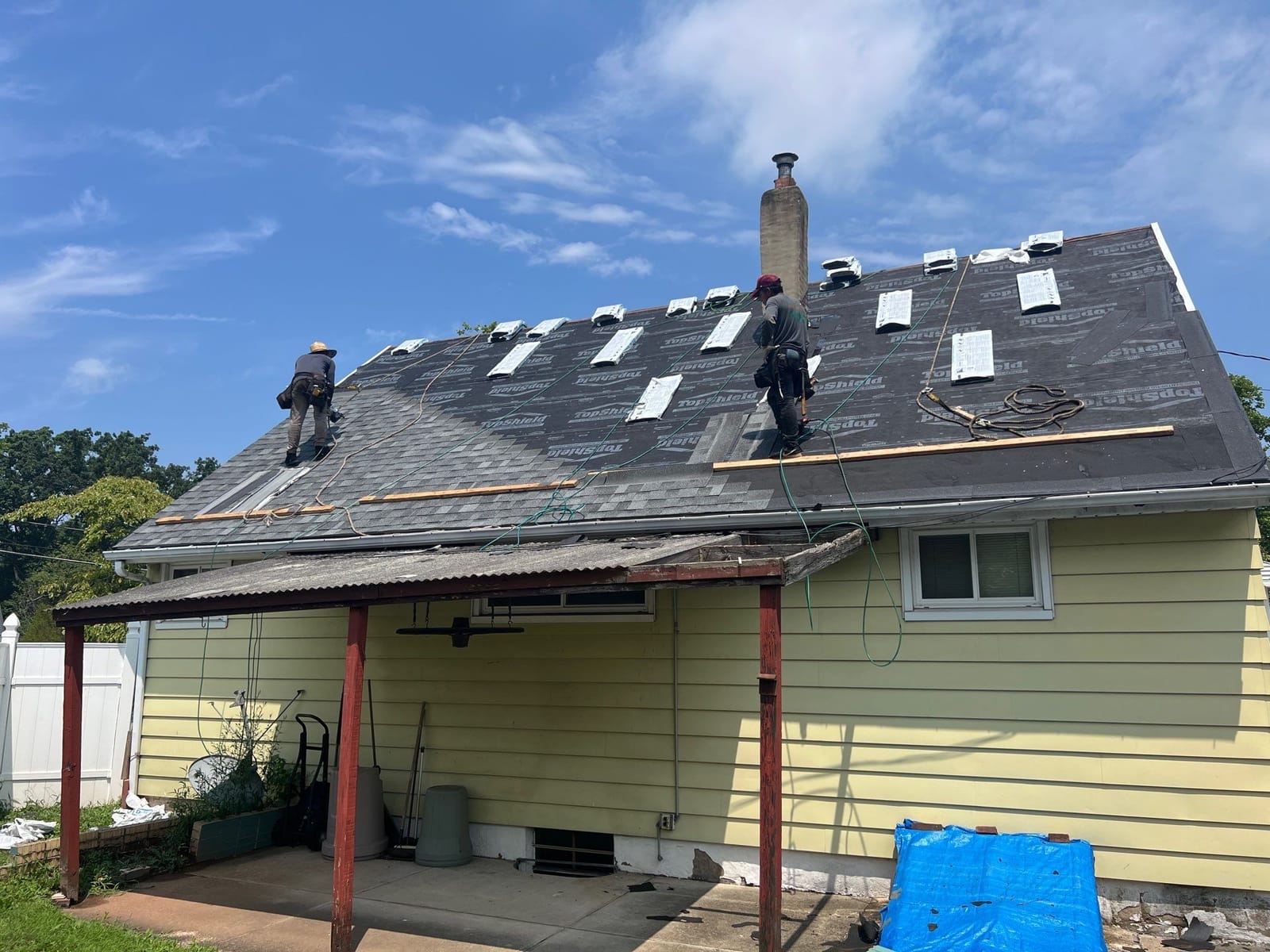
Every jobsite tells a story: what the house looked like when you arrived, what you found behind the old siding, and how the finished work turned out. If that story only lives in your crew's memory, it disappears the moment there's a question about the job. Documenting every jobsite with dated photos is one of the cheapest forms of protection a contracting business can have.
It protects you when there's a disagreement
Most disputes come down to "what was there before?" A homeowner remembers the gutters being straight, or the driveway having no cracks. Photos taken before work starts settle those questions in minutes instead of weeks. Photos of hidden conditions, like rotted sheathing or a cracked rafter, show why a change order was needed.
It supports insurance and warranty claims
Adjusters want evidence. Clear before, during and after photos of storm damage, materials and installation details make claims move faster for your customers. Manufacturer warranties often depend on proper installation, and photos of underlayment, flashing and fastening are your proof.
It keeps the office and the field in sync
When the office can see the job without driving there, estimates get more accurate, materials get ordered right, and questions get answered while the crew is still on site.
It turns finished work into marketing
The same photos that protect you also sell your next job. A gallery of real local projects builds more trust than any stock photo. See how contractors show real finished projects.
How to make it a habit
- Photograph every elevation and the work area before anything is touched.
- Capture hidden conditions the moment they're exposed.
- Take photos of key installation steps that will be covered up.
- Finish with wide shots of the completed work and the cleaned-up site.
- Keep every photo filed by job, with the date and time, in one place the whole team can reach.
About the author
CrewVisto Editors
Guides and news for contractors and homeowners from the team behind CrewVisto.
This article is general information. Codes, prices and warranties vary by town and product; have a licensed contractor look at your situation before you start.
Comments
Loading comments…